Is architectural modernism a left-wing project?
It’s widely assumed that architectural Modernism — the Bauhaus, Le Corbusier, the International Style, and everything downstream of them — was a left-wing project: an expression of progressive, egalitarian, even socialist politics, in contrast to a conservative, traditionalist opposition.
The evidence doesn’t support this. Modernism’s own founding figures and institutions had entanglements with authoritarianism and fascism that are inconvenient for a “Modernism is inherently left-wing” story, and its left-wing identity looks, on inspection, like something assembled after the fact rather than something built into the movement from the start. But the correct conclusion isn’t “Modernism was secretly a fascist project” either — that’s just as tidy a story as the one it replaces, and the evidence doesn’t support it any better. The real picture is messier: Modernism was one of a mixed bag of early-twentieth-century “progressive” and technocratic reform movements — a bag that also contained eugenics, prohibition and scientific management — whose members were united by faith in expert-led, rationalist reform of society, not by a shared position on the political left-right axis.
This page sets out the evidence for that, organised by claim, with sources.
The retrofit: how Modernism got its left-wing pedigree
The standard textbook lineage — Arts and Crafts → Voysey and Mackintosh → the Bauhaus → the Modern Movement, an “inevitable, progressive evolution” — comes substantially from one book: Nikolaus Pevsner’s Pioneers of the Modern Movement (1936, later reissued as Pioneers of Modern Design). James Stevens Curl, in Making Dystopia: The Strange Rise and Survival of Architectural Barbarism (Oxford University Press, 2018), devotes a chapter — titled “Makers of mythologies and false analogies” — to arguing that Pevsner’s lineage was a deliberate misreading of the Arts and Crafts movement and Art Nouveau, constructed to give Modernism a respectable, progressive genealogy, and that it wrote out the architects who didn’t fit.
Two people who lived through this retrofit had something to say about it:
- C.F.A. Voysey (1857–1941) was alive when Pevsner’s book cast him as a “pioneer” of the Modern Movement — and objected. Pevsner himself later admitted in print that Voysey was “cross” with him for discussing his work as “pioneer work of the twentieth century style,” which he “disliked.” In a lecture to the Bartlett School of Architecture Society on 21 February 1934, reported by the Society’s Honorary Secretary Reginald W. Cave in the RIBA Journal (vol. xli, no.9, 10 March 1934, p.479), Voysey called the Modern Movement “pitifully full of such faults as proportions that were vulgarly aggressive, mountebank eccentricities in detail, and windows built lying down on their sides” — dismissing it as “false originality,” as against true originality, which he defined as “the spiritual something given to the development of traditional forms by the individual artist.” Independently, and with a firmer citation, Wendy Hitchmough’s C.F.A. Voysey (Phaidon, 1995, pp.18, 221–2) records that Voysey “must have gritted his teeth” at John Betjeman’s 1931 claim, in the Architectural Review, that his work “prefigured the Modern Movement.”
- Charles Rennie Mackintosh (1868–1928) offers a genuinely different case, worth not flattening into a parallel with Voysey: no statement from Mackintosh himself objecting to a modernist retrofit has turned up, but that’s because he had withdrawn from architectural practice around 1913–14 and died in relative obscurity in 1928, before the retrofit happened. Both events that made him a modernist “pioneer” — the 1933 Memorial Exhibition in Glasgow, and Pevsner’s 1936 book calling him “the real forerunner of Le Corbusier” — came after his death. The one documented objection is secondhand: at the 1933 exhibition, its organiser William Davidson (Mackintosh’s own friend and patron) clashed with Philip Morton Shand, an influential modernist advocate, over Shand’s insistence on placing Mackintosh in a “linear history” leading to the Modern Movement.
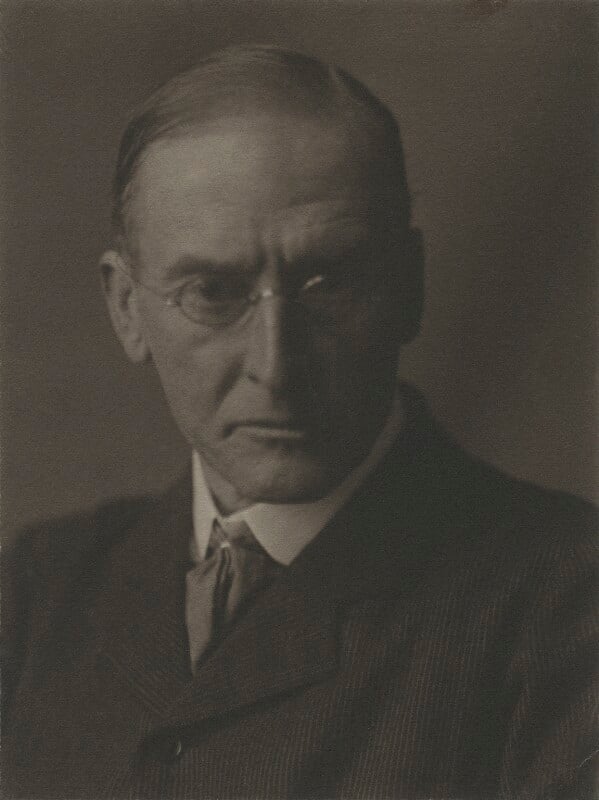
C.F.A. Voysey, 1920s. Source: Wikimedia Commons, public domain.
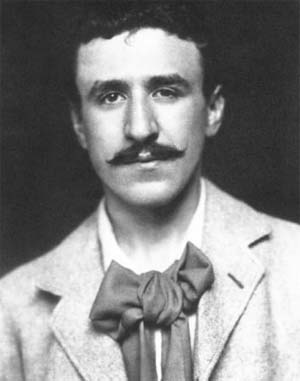
Charles Rennie Mackintosh, photograph by James Craig Annan. Source: Wikimedia Commons, public domain.
A third case is more ironic than either, and cuts closer to the bone: William Morris (1834–1896) has bona fide left-wing credentials that neither Voysey nor Mackintosh can match — he co-founded the Socialist League in December 1884 (alongside Eleanor Marx and others), edited its paper Commonweal, and campaigned for the reorganisation of society “from the root up,” explicitly rejecting capitalist mass manufacture as exploitative and dehumanising. But Morris was also passionately, wholeheartedly in favour of ornament — the exact opposite of Modernism’s defining aesthetic position. His 1881 lecture “Some Hints on Pattern-Designing” opens by insisting that decoration is serious art: “people have called this art ornamental art, though indeed all real art is ornamental.” Morris’s own practice — dense, deliberate wallpaper and textile pattern — is a standing rebuttal of Loos’s “ornament is crime,” a generation before Loos wrote it. Pevsner made him Modernism’s official starting point regardless: the book’s full title is literally Pioneers of Modern Design: From William Morris to Walter Gropius. Not because of anything in Morris’s actual aesthetic — because his left politics fit the story Pevsner wanted modernism’s genealogy to tell. Like Mackintosh, Morris was long dead (1896, four decades before Pevsner’s book) and never had the chance to object to being cast this way.
Pevsner wasn’t even first to give Modernism a genealogy, which complicates the “retrofit” story in an interesting way rather than undermining it. Sigfried Giedion’s Bauen in Frankreich, Bauen in Eisen, Bauen in Eisenbeton (1928) got there eight years earlier — but built a different lineage, a technical history of nineteenth-century iron and concrete engineering, not the Arts-and-Crafts-with-a-progressive-gloss story Curl attacks. And Adolf Behne’s Neues Wohnen – Neues Bauen (1927) is a different case again: Behne genuinely was on the left, writing contemporaneously in Weimar Germany, not retrofitted after the fact. So were parts of CIAM’s social-housing wing (Ernst May, Bruno Taut). The point isn’t that no early modernist had real left commitments — some did — it’s that the coherent, movement-wide left identity later attached to Modernism as a whole, folding in figures regardless of their actual politics, is what got assembled retroactively, mainly via Pevsner’s influential English-language book.
The founding figures
Adolf Loos’s 1910 lecture “Ornament and Crime” is treated as a foundational text of Modernism — its argument that ornament is regressive, even criminal, prefigures the movement’s whole aesthetic programme. Its textual history is itself a small illustration of this page’s argument: the lecture is usually dated “1908,” but that date was a relabelling invented by Loos’s assistant Henry Kulka for a 1931 reprint, apparently to claim priority over the Vienna Secessionists. The essay wasn’t printed at all until 1913 — in French, as “Ornement et Crime,” in Les Cahiers d’aujourd’hui — translated by Marcel Ray. The German text, “Ornament und Verbrechen,” wasn’t printed until 16 years later, in the Frankfurter Zeitung on 24 October 1929. Three independent sources converge on this account against one unsourced outlier (French Wikipedia’s claim that Loos wrote it in German in 1908), so this page treats the 1913 French text as canonical for quotation, with the 1929 German text as secondary:
French (1913, canonical): “Le Papou tue ses ennemis et les mange. Il n’est pas un criminel. Mais quand l’homme moderne tue quelqu’un et le mange, il est un criminel ou un dégénéré.” (articule.net, reprinting the Le Corbusier–introduced 1920 L’Esprit Nouveau republication)
English: “The Papuan kills his enemies and eats them. He is not a criminal. But when modern man kills and eats somebody he is either a criminal or a degenerate.” (standard English translation)
Loos goes further, describing an architect who designs an “art nouveau” carpet as “un escroc ou un dégénéré” — literally “a swindler/fraudster or a degenerate,” an accusation of deliberate criminal deceit. The standard English translation renders escroc as “rogue,” which is markedly softer — closer to “mischievous scamp” than “fraudster.” The wider argument of the essay explicitly racialises ornament as a marker of “inferior races,” alongside women and children, against the ornament-free “modern man” — not the incidental detail of a movement founding text, but its central metaphor.
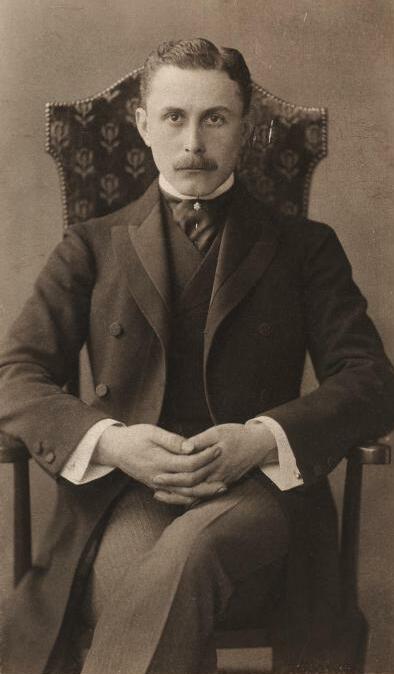
Adolf Loos, c.1904. Photograph by Otto Mayer. Source: Wikimedia Commons / Österreichische Nationalbibliothek, Bildarchiv Austria, public domain.
Walter Gropius and Ludwig Mies van der Rohe were not, contrary to the popular story, chased out of Germany by the Nazis in the 1930s. Both tried to work with the new regime. Mies entered the 1933 Reichsbank competition and won the jury’s vote — but Hitler personally overrode the jury in favour of a more conventionally classical design by Heinrich Wolff, so this isn’t a simple story of fascism embracing Modernism either. Mies went further: he signed the Aufruf der Kulturschaffenden (“Call to Cultural Workers”), an August 1934 declaration of loyalty to Hitler published in the Nazi party paper Völkischer Beobachter the day before the plebiscite confirming Hitler’s combined Führer/Chancellor role, and he signed at least one later letter — resigning his seat at the Prussian Academy of Arts on 19 July 1937 — “Heil Hitler!” (Cited via Elaine Hochman, Architects of Fortune: Mies van der Rohe and the Third Reich, Weidenfeld & Nicolson, 1989, and Jonathan Petropoulos, Artists under Hitler: Collaboration and Survival in Nazi Germany, Yale University Press, 2014 — neither read directly for this page.) No comparable evidence turned up for Gropius; one source states he was “more circumspect than Mies” on this point.
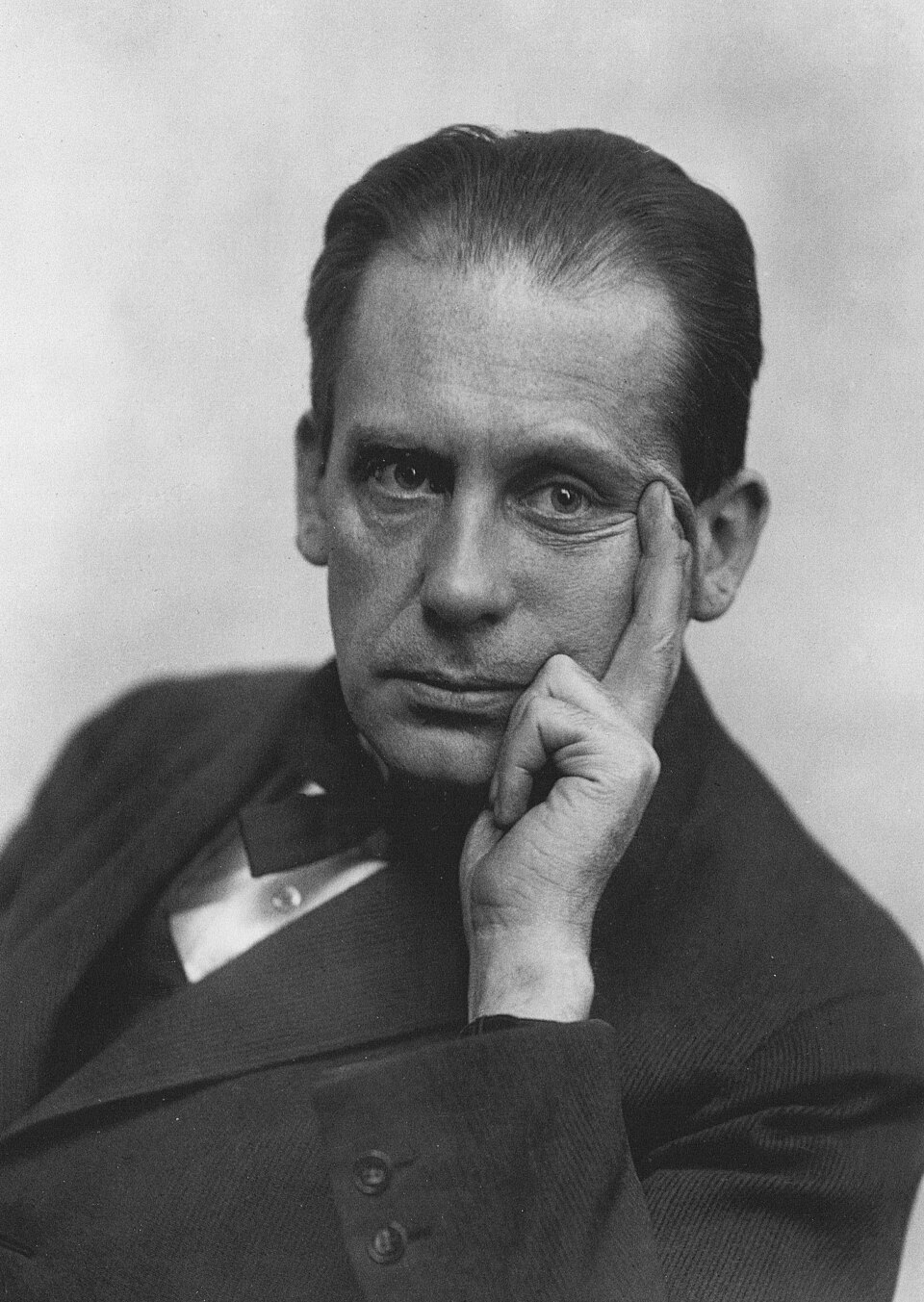
Walter Gropius, c.1919. Photograph by Louis Held. Source: Wikimedia Commons, public domain.
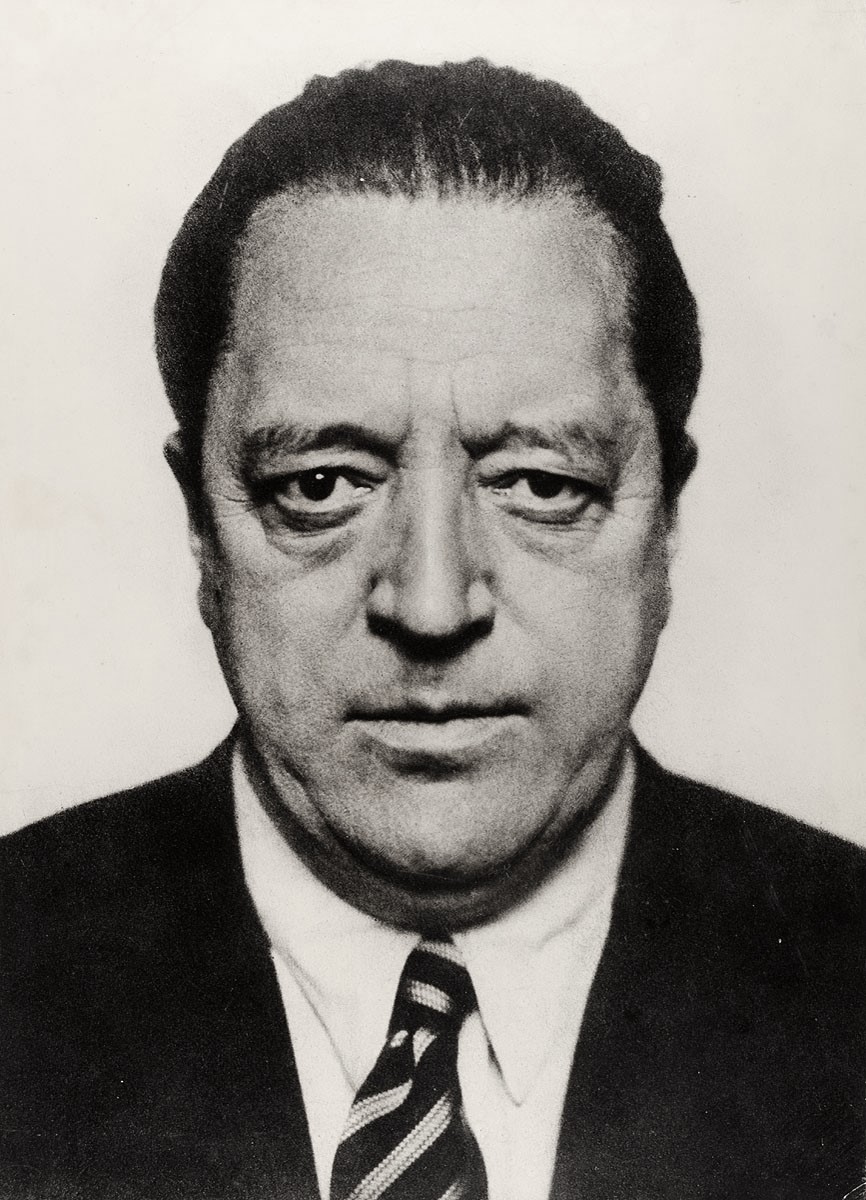
Ludwig Mies van der Rohe, 1934. Photograph by Hugo Erfurth. Source: Wikimedia Commons, public domain.
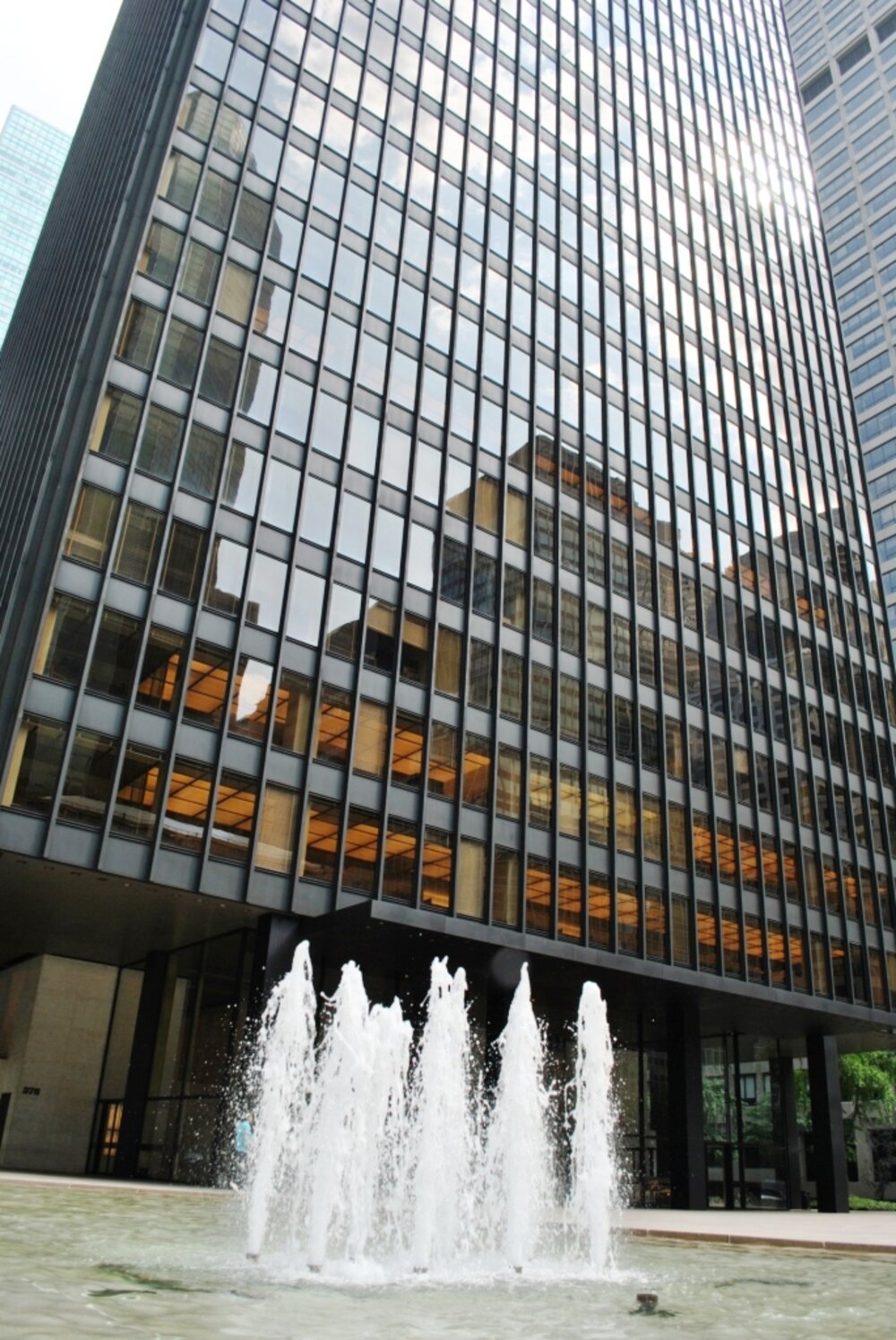
The Seagram Building, New York (Mies van der Rohe with Philip Johnson, 1958) — the building most identified with Mies’s mature style. Photograph by Elisa.rolle, 2014. Source: Wikimedia Commons, CC BY-SA 4.0.
Philip Johnson, who co-curated MoMA’s 1932 “International Style” exhibition — the show generally credited with importing European Modernism to the United States, and which coined the term itself — founded and led his own American fascist party, the “National Party” (aka the “Young Nationalists”), complete with grey-shirt uniforms and a “flying wedge” insignia standing in for a swastika. He tried to recruit Huey Long, then Father Coughlin, as a figurehead; the party later ran candidates in Ohio alongside “pro-Nazi German-American Bundists, Klansmen, and members of the Black Legion” (per Mark Lamster’s 2018 biography The Man in the Glass House). He attended Nuremberg rallies, wrote for Coughlin’s antisemitic paper Social Justice, reported admiringly from the September 1939 invasion of Poland (“We saw Warsaw burn and Modlin being bombed. It was a stirring spectacle”), and published a favourable review of Mein Kampf. He renounced these views in 1941. Johnson also excluded Erich Mendelsohn — arguably the most interesting early modernist architect, and Jewish — from the American Modernist moment he was curating; Mendelsohn worked instead in Britain, designing the De La Warr Pavilion at Bexhill-on-Sea. (No documented connection between Loos and any Nazi-era architect — Speer, Todt, or Sagebiel — turned up in researching this page; the resemblance between Loos’s ornament-free aesthetic and Speer’s stripped classicism is a stylistic comparison, not a traceable line of influence, and this page doesn’t claim otherwise.)
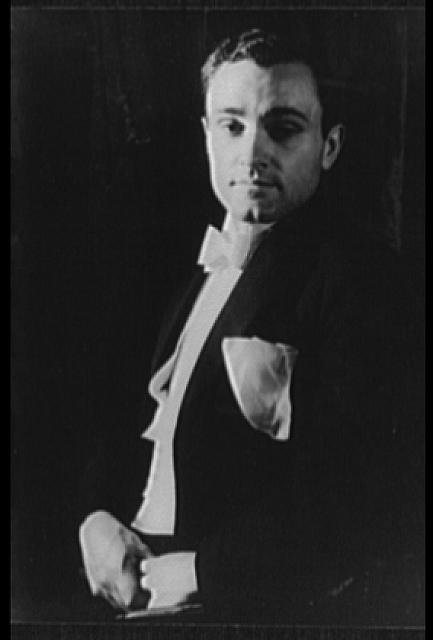
Philip Johnson. Photograph by Carl Van Vechten. Source: Library of Congress via Wikimedia Commons, public domain.
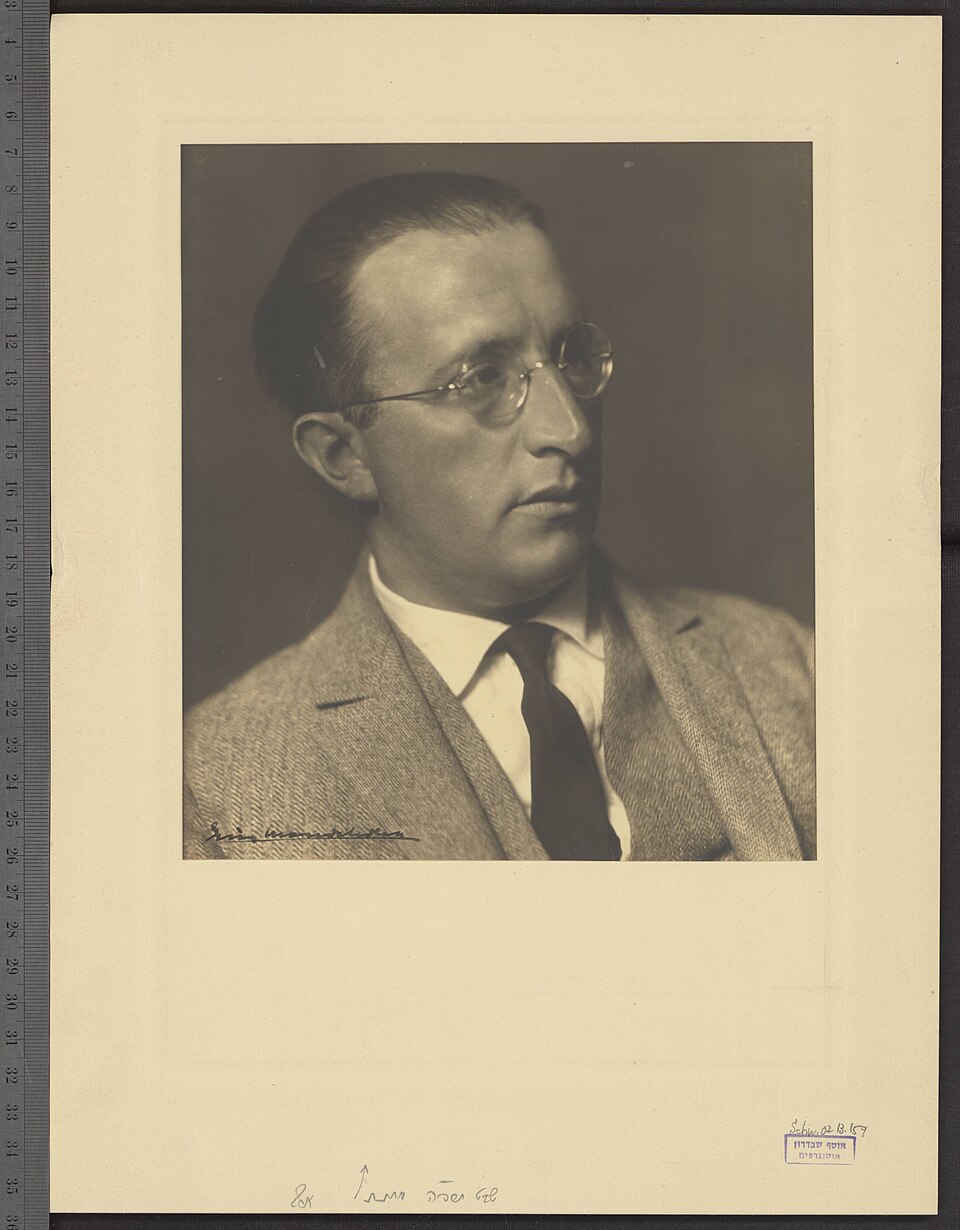
Erich Mendelsohn. Source: Wikimedia Commons, CC BY 3.0.
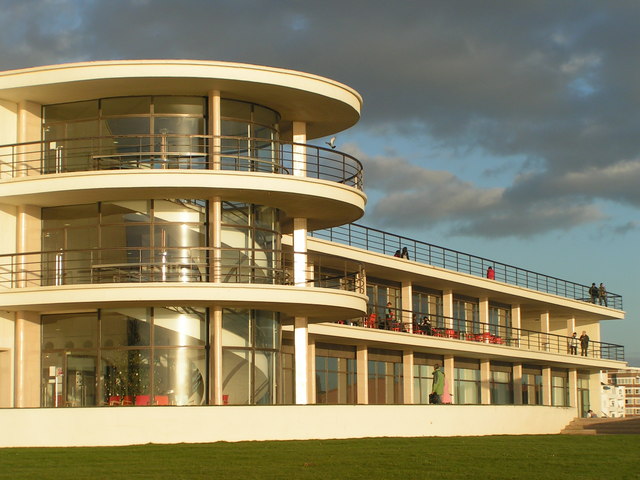
The De La Warr Pavilion, Bexhill-on-Sea (Mendelsohn & Chermayeff, 1935). Photograph by Brian Whittle. Source: Wikimedia Commons / geograph.org.uk, CC BY-SA 2.0.
Le Corbusier is the figure whose case most directly undercuts a coherent “modernism is left-wing” story, but the most careful academic account of it — Jean-Louis Cohen’s “Le Corbusier, Jews and fascism: setting the record straight” (Stadt Zürich Kultur, October 2012) — is also the source that most complicates a simple “modernism is fascist” replacement. Cohen states flatly that Le Corbusier “was never affiliated to any fascist organisation — nor to any other political grouping,” which sits in tension with Simone Brott’s academic study (“In the shadow of the Enlightenment: Le Corbusier, Le Faisceau and Georges Valois,” SAHANZ 30, 2013) documenting that Le Faisceau — self-described as the first fascist group in France, modelled on Mussolini’s Fasci — put his Plan Voisin on the cover of their journal in January 1927, and that he presented his urban designs at one of their rallies that May. This looks less like a factual dispute than a genuine scholarly disagreement about degree: courted-and-approached versus formally-affiliated.
What Cohen’s essay documents beyond dispute is a pattern across Corbusier’s career that fits this page’s actual thesis better than either “left” or “fascist” would: a consistent pursuit of whichever strong central authority might let him build, regardless of its politics. He sought the patronage of the Soviet Centrosoyuz (1928, building their Moscow headquarters, admiring Bolshevik “grandeur”); of Mussolini’s Italy (1932–34, repeatedly trying to meet Mussolini and dedicating his Œuvre complète to him “with my respect and admiration” — Hans Girsberger, Mes contacts avec Le Corbusier, Zurich, 1981, p.39); briefly the French Popular Front (1936, after writing to his mother that “the right will be beaten, it’s time!”); and finally Vichy (1941–42), joining a government housing-review commission and designing basic emergency “Murondin” housing for Vichy’s youth-mobilisation movements. Cohen’s own synthesis: “Le Corbusier would have believed that the Vichy government, freed from the constraints and sluggishness of parliamentary life, could implement a regional planning and urban rationalisation programme… The emphasis on authority and also on the necessity of entrusting power to the technicians were bound to have tempted him.” (Quotations in this paragraph are Cohen’s own English translations of French archival sources; the original French wordings haven’t been independently verified for this page.) Cohen is careful to note the limit of this, too: “at no point did he come out explicitly in favour of the racial measures of Pétain’s successive governments” — a distinct claim from the private antisemitic remarks in his letters to his mother, first surfaced publicly in 2015 (“Just laws will be imposed on money, Jews (partly responsible), and Freemasons”), which prompted three French books on the subject the same year.
Corbusier’s own founding text, Vers une architecture (1923), ends with the line: “Architecture or Revolution. Revolution can be avoided.” Read in context, this positions Modernist architecture as a way to head off left-wing revolution by solving the housing and social crisis through technocratic reform from above — a modernist manifesto explicitly framing itself as anti-revolutionary and stabilising, in the architect’s own words.
A smaller, stranger data point on the same technocratic instinct: in La Ville Radieuse (The Radiant City, 1935), Corbusier imagines the dispersed, car-dependent city his own planning would produce, and treats its sheer wastefulness as a selling point: “The cities will be part of the country. I shall live 30 miles from my office in one direction, under a pine tree; my secretary will live 30 miles away from it too, in the other direction, under another pine tree. We shall both have our own car. We shall use up tires, wear out road surfaces and gears, consume oil and gasoline. All of which will necessitate a great deal of work… enough for all.” Consuming resources and manufacturing goods, purely to keep industry employed, is presented as an argument for the plan rather than a cost of it — the same top-down, indifferent-to-outcome social engineering as the rest of his career, just aimed at full employment instead of revolution or fascism this time. (English translation as commonly quoted; the original French wording and a specific page reference haven’t been verified for this page.)
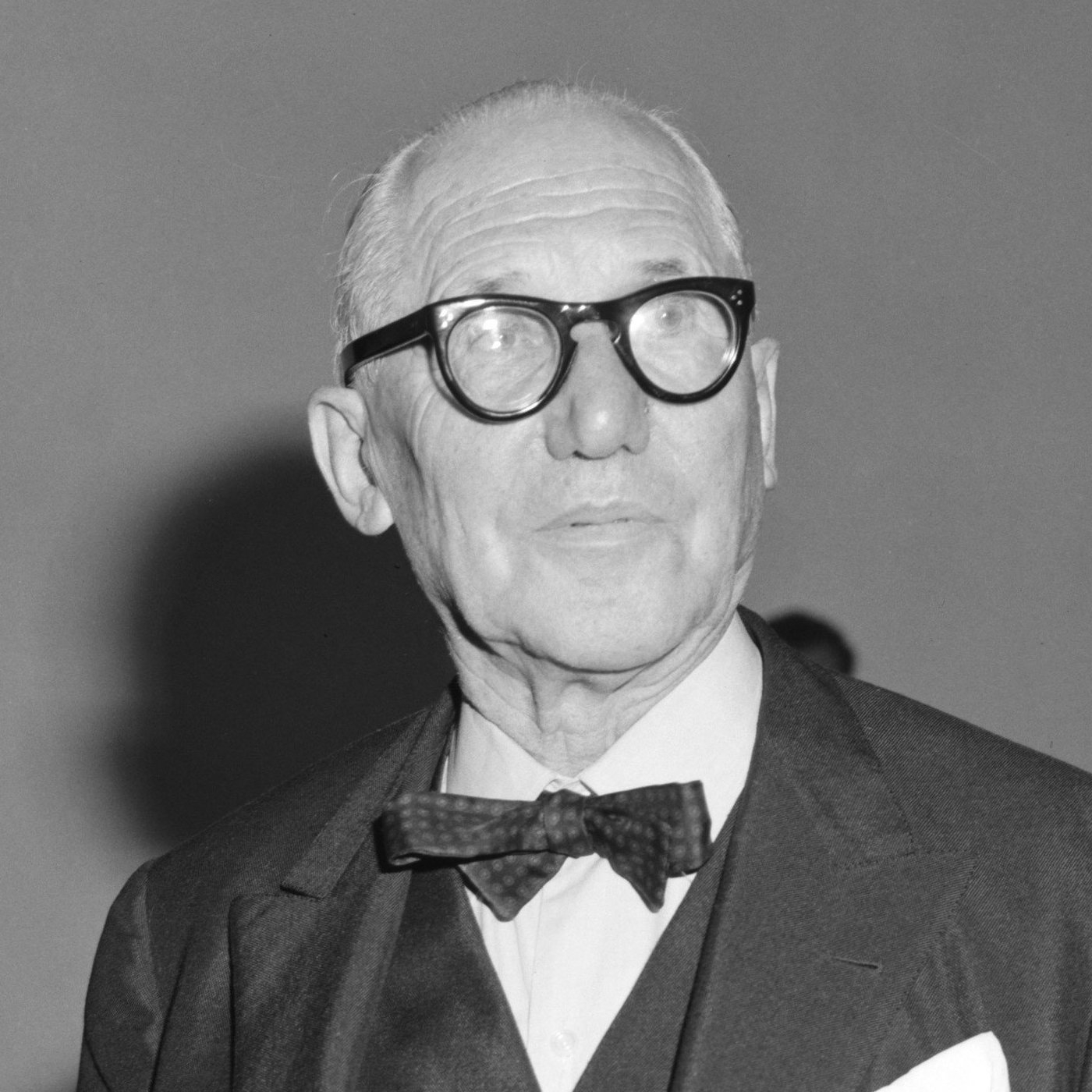
Le Corbusier, 1964. Photograph by Joop van Bilsen for Anefo. Source: Wikimedia Commons, CC0/public domain.
Movements, not just individuals
This isn’t only a story about compromised or opportunistic individuals — several early-modernist movements had documented entanglements at the movement level.
Italian Rationalism produced the starkest case available: Giuseppe Terragni, co-founder of the Rationalist “Gruppo 7,” designed the Casa del Fascio in Como (1932–36) — an explicitly modernist building, built as a National Fascist Party headquarters, not merely the work of an architect who happened to practise under fascism. Other Case del Fascio were built in the same style by other Rationalist architects (Adalberto Libera, Saverio Muratori, Ludovico Quaroni, Giuseppe Samonà).

Giuseppe Terragni. Source: Wikimedia Commons, public domain.
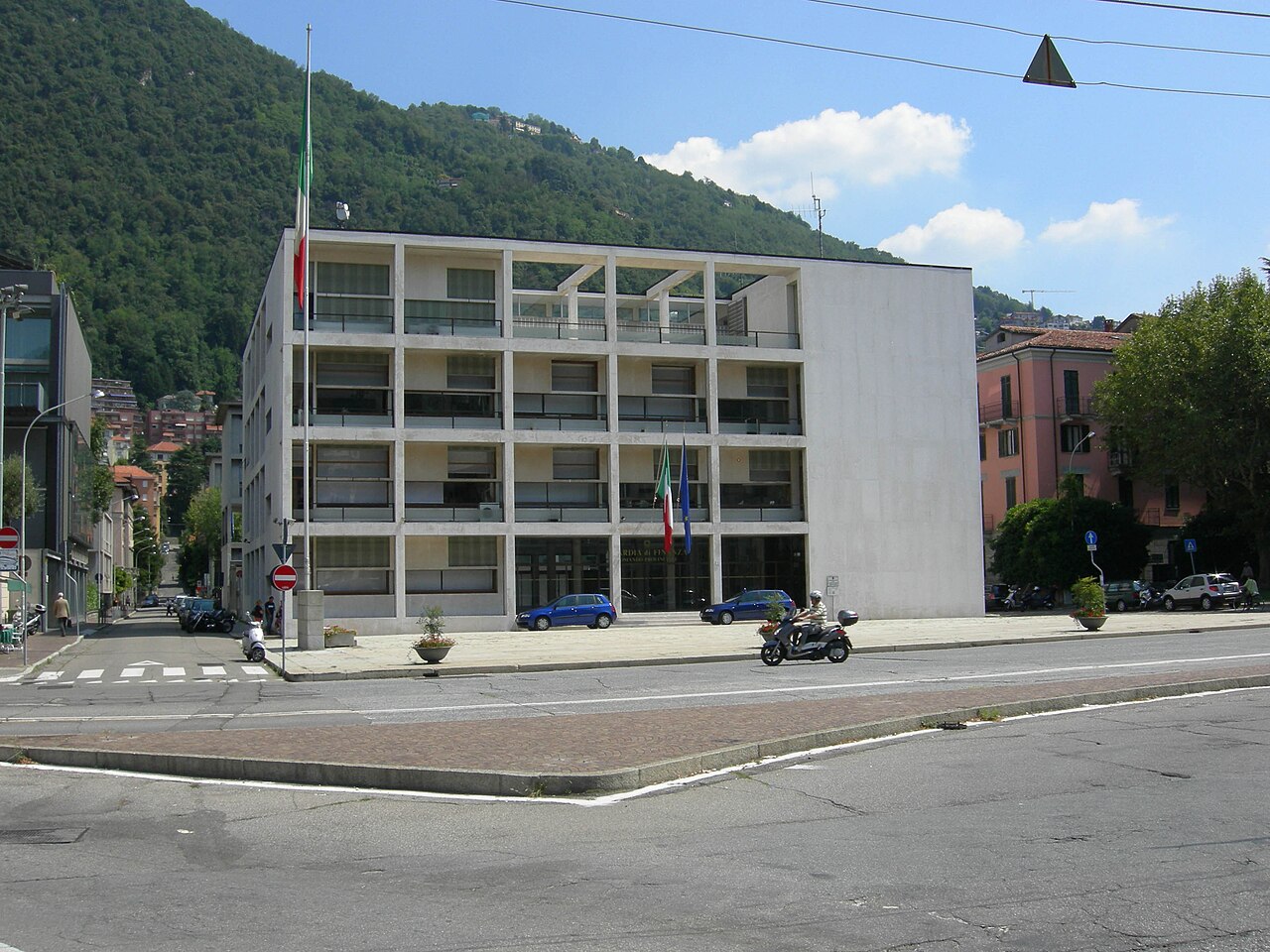
The Casa del Fascio, Como (Terragni, 1932–36). Photograph by Nicola Quirico. Source: Wikimedia Commons, CC BY-SA 4.0.
Futurism, an earlier and even more explicitly avant-garde movement, entangled itself with fascism directly: F.T. Marinetti’s Futurist Manifesto was published in French, not Italian, on the front page of Le Figaro, 20 February 1909. Marinetti went on to co-found the Partito Politico Futurista (1918), which merged into Mussolini’s Fasci di Combattimento the following year, and he remained associated with Italian Fascism afterward.
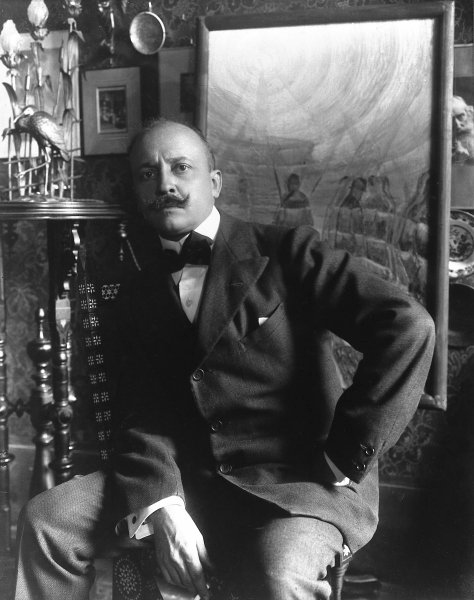
F.T. Marinetti. Source: Wikimedia Commons, public domain.
Its most quoted line reads, in the original and in a corrected translation (the standard widely-circulated English version softens or substitutes several of its key phrases — see below):
French: “Nous voulons glorifier la guerre — seule hygiène du monde, — le militarisme, le patriotisme, le geste destructeur des anarchistes, les belles Idées qui tuent, et le mépris de la femme.”
English (corrected): “We want to glorify war — the world’s only hygiene — militarism, patriotism, the anarchists’ destructive gesture, the beautiful Ideas that kill, and contempt for woman.”
The standard English translation (commonly attributed to R.W. Flint) instead reads “the destructive gesture of freedom-bringers, beautiful ideas worth dying for” — replacing the specific political referent, “anarchists,” with an admiring euphemism absent from the French, and reversing the sentence’s agency from ideas that kill other people to ideas one would die for oneself. Both changes make the line read as considerably more sympathetic than Marinetti’s original.
This wasn’t hindsight, either — American architectural opinion was reading Futurism as Fascist in real time. “The New Rome,” an unsigned item in the US trade magazine The Architect (Vol. VI, No.1, April 1926), reported that Mussolini had given Italian architects “five years in which to revise the Imperial City along strictly modern lines. No archeologists need apply,” and quoted Marinetti — named as “the ‘father of futurism’” — directly:
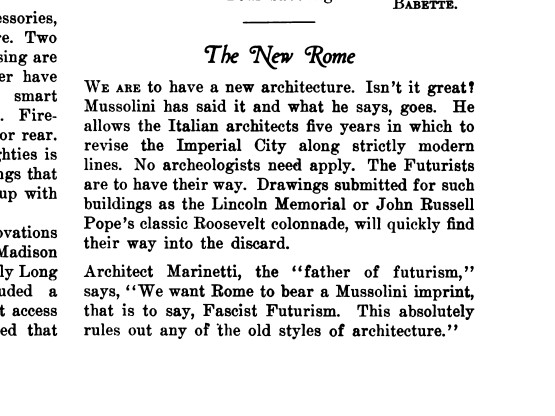
“The New Rome,” The Architect, Vol. VI, No.1 (April 1926). Source: Bruno Postle’s own copy.
“We want Rome to bear a Mussolini imprint, that is to say, Fascist Futurism. This absolutely rules out any of the old styles of architecture.”
Postwar New Brutalism has its own contested wartime debt. Gennaro Postiglione’s academic paper “The Atlantic Wall: Bunker and/as Modern Architecture” (DOCOMOMO Ibérico, Cádiz, 2007) argues, with a full scholarly apparatus, that the reinforced-concrete gun emplacements and bunkers of Hitler’s Atlantic Wall — including the fortifications still standing on the Channel Islands — share both an aesthetic and an industrial-production logic with Modern Movement architecture, citing Le Corbusier’s own 1923 writing on horizontal vision, and building on Paul Virilio’s Bunker Archéologie (Centre Georges Pompidou, 1975; Virilio personally photographed Atlantic Wall bunkers, including Channel Islands sites, from 1958–65) and Diller & Scofidio’s Back to the Front: Tourism of War (1995). Postiglione’s paper argues the general Atlantic-Wall/Modern-Movement connection, but doesn’t name New Brutalism or the Smithsons specifically. That sharper, more specific claim — that British New Brutalism drew directly on Channel Islands fortifications — comes instead from critic Jonathan Meades (BBC Four’s Bunkers, Brutalism and Bloodymindedness, 2014), who names Guernsey specifically and calls the Wehrmacht engineer Friedrich Tamms “the first Brutalist.” Meades makes this case as a critic, without academic citation — worth treating as a stimulating argument rather than settled scholarship, distinct from Postiglione’s more general, properly-cited claim.
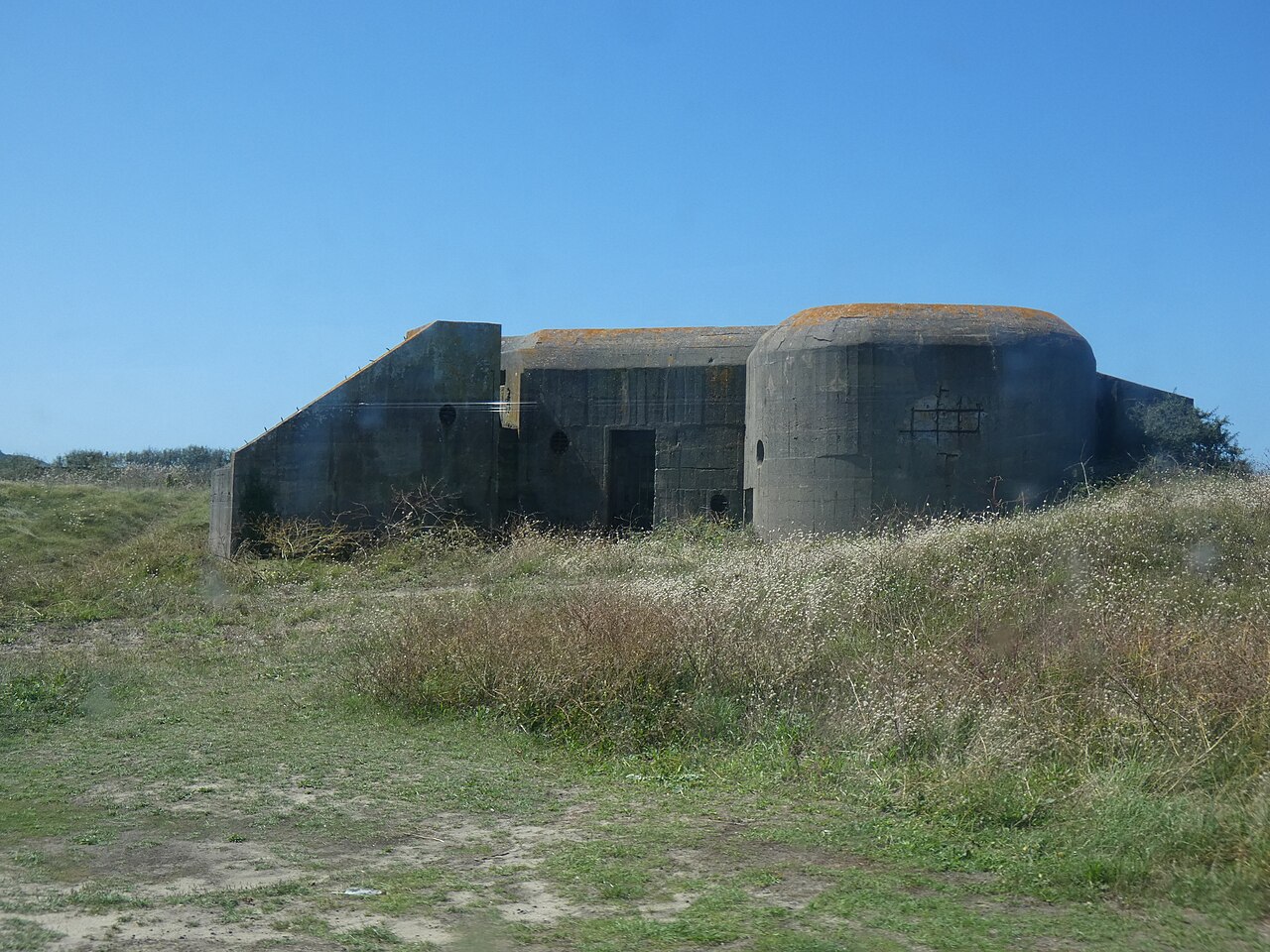
Atlantic Wall bunker, Guernsey. Photograph by David.Monniaux. Source: Wikimedia Commons, CC BY-SA 4.0.
Nazi Germany’s own architectural policy wasn’t monolithically classicist, which matters for resisting an equally tidy “fascism = anti-modernist” story. Barbara Miller Lane’s Architecture and Politics in Germany, 1918–1945 (Harvard University Press, 1968) — the standard academic study — argues Nazi cultural policy was “not cohesive,” the product of competing factions rather than a single doctrine. Alongside Speer’s stripped, ornament-free monumentalism for party buildings sat the “folksy” Heimatschutzstil of settlement housing for ordinary Germans (steep roofs, half-timbering, explicitly tied to Blut und Boden ideology) — and a third, straightforwardly modernist/functionalist strand for infrastructure: Fritz Todt, builder of the Autobahn, treated modern engineering as a “pillar” of Nazi ideology. Tempelhof Airport (Ernst Sagebiel, begun 1936) is the clearest single building combining more than one of these registers — a modern steel-skeleton structure under a neoclassical limestone façade. (Sagebiel’s own training, incidentally, was as chief assistant to Erich Mendelsohn — the same Jewish modernist Philip Johnson excluded from the American MoMA moment.)
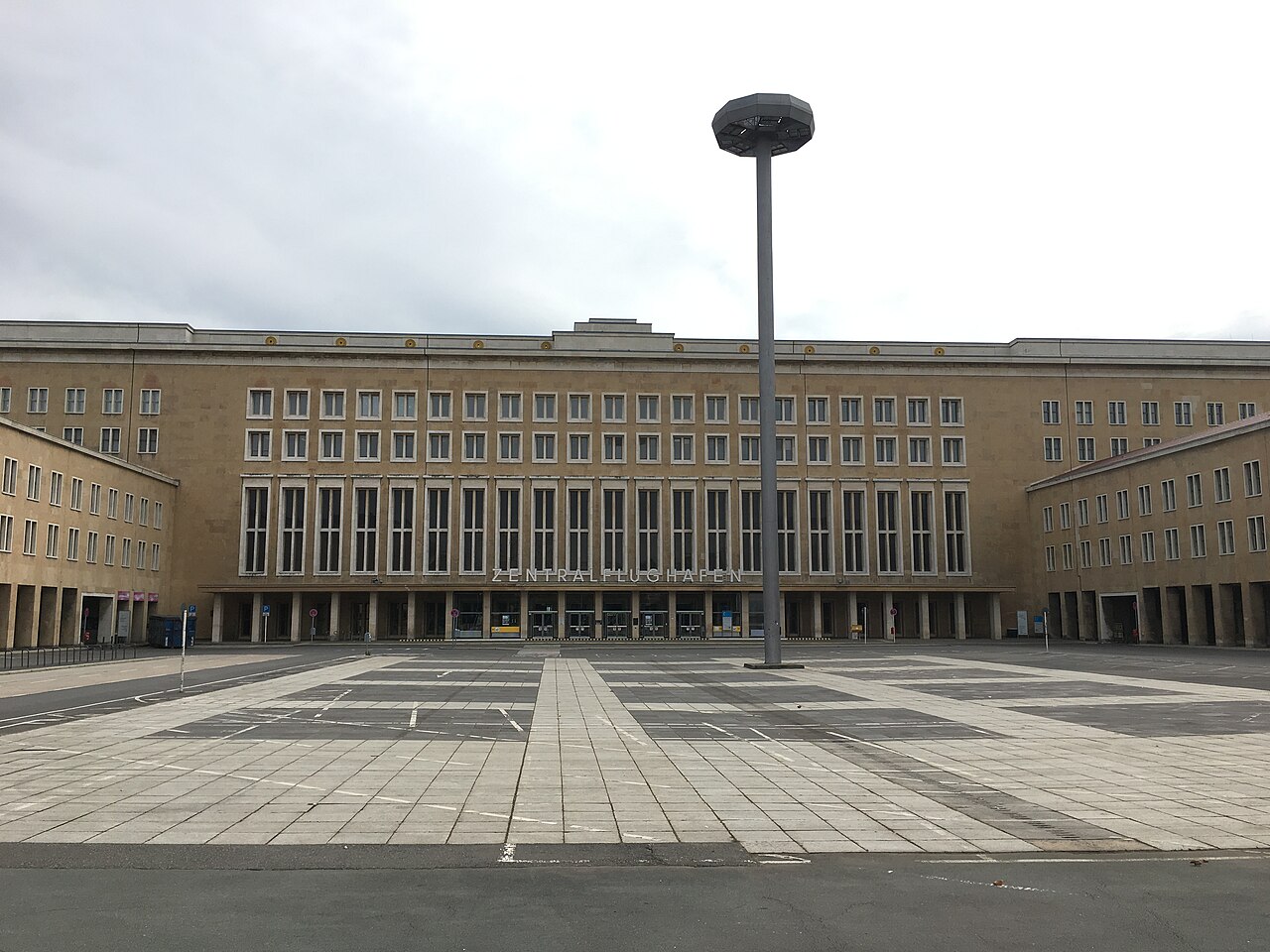
Tempelhof Airport, Berlin (Sagebiel, begun 1936). Photograph by airbus777. Source: Wikimedia Commons, CC BY 2.0.
A smaller, less famous building makes the same point even more directly. The Reichsautobahn-Tankstelle at Fürstenwalde (1937, on the Berlin–Frankfurt/Oder motorway) is a petrol station in an unambiguously modernist idiom — flat roof, exposed concrete-skeleton structure, a triangular plan following the road geometry, clinker-brick cladding — built as ordinary state infrastructure under the Nazi regime, not as a party monument. It’s now the last surviving example of its type in Germany (three related stations survive in Poland) and is a protected historical monument. Its architect, Friedrich Tamms, is the same person named above in the Atlantic Wall/New Brutalism discussion — he later worked under Speer on the Reichskanzlei and, per Meades’s argument, on Atlantic Wall fortifications too. One person’s career here runs directly from a modernist Autobahn service station, to Speer’s staff, to the bunkers a British critic credits with founding Brutalism — as concrete a thread linking Nazi-era infrastructure, monumental Nazi architecture, and postwar British Modernism as this page has found.
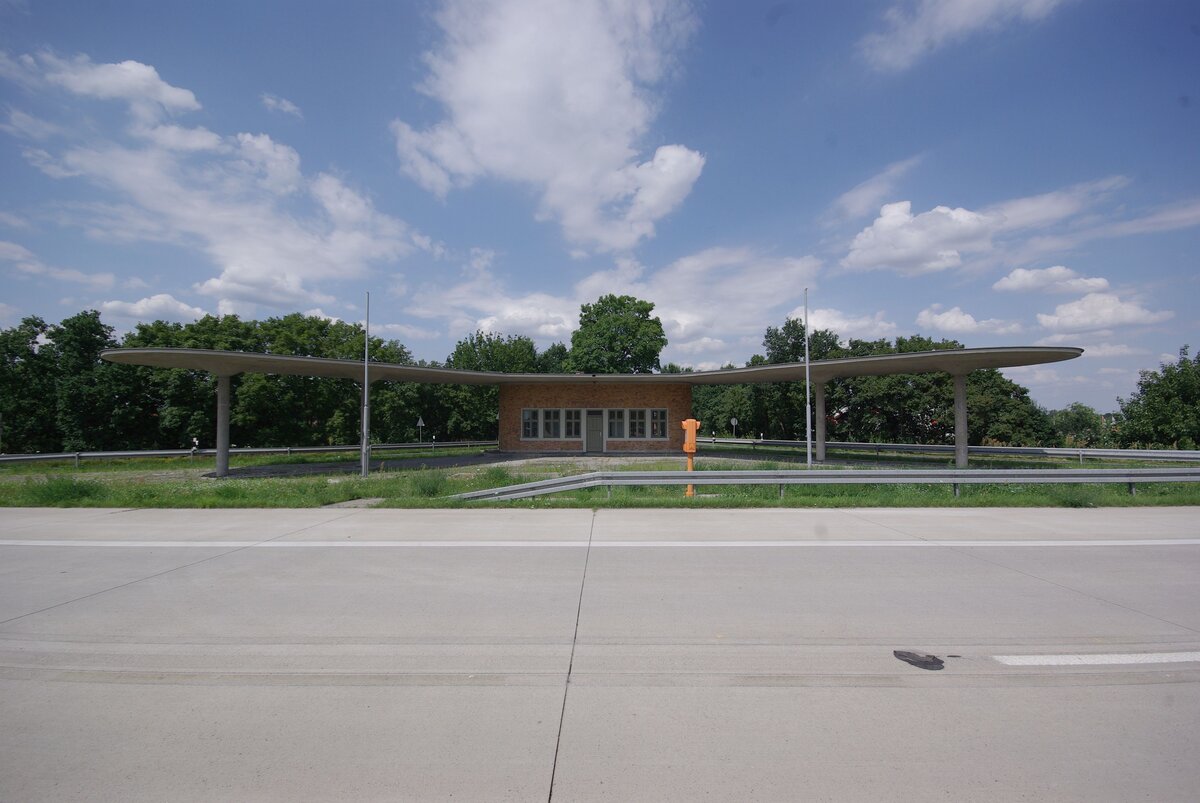
Reichsautobahn-Tankstelle Fürstenwalde (Tamms, 1937), photographed in 2009. Photograph by Clemensfranz. Source: Wikimedia Commons, CC BY-SA 3.0.
The actual pattern: a mixed bag of technocratic reform
None of the material above, on its own, supports this page’s actual thesis — it shows individual modernist architects and movements had authoritarian or fascist entanglements, which is a different claim from “the left-wing framing of Modernism was retro-fitted; Modernism actually belongs alongside a mixed bag of Progressive-Era technocratic reforms.” That claim needs its own evidence, and it exists:
- Mauro F. Guillén, The Taylorized Beauty of the Mechanical: Scientific Management and the Rise of Modernist Architecture (Princeton University Press, 2006) traces scientific-management (Taylorist) principles across nine countries as, in a reviewer’s words, “a central factor” in Modernism’s emergence — crediting Taylor and Ford with “signal influence” on both Gropius and Le Corbusier’s Towards a New Architecture. (One review flags the book as thinner on aesthetics and geographically incomplete — solid rather than groundbreaking.)
- Fabiola López-Durán, Eugenics in the Garden: Transatlantic Architecture and the Crafting of Modernity (University of Texas Press, 2018; winner of the Dedalus Foundation’s 2019 Robert Motherwell Book Award) traces how eugenic theory moved from medicine into architecture and urban planning in France and Latin America — arguing, specifically, that Le Corbusier’s own Modulor system and his “universal type-needs” concept encode a racialised, “whitening” normative body, and connecting the 1920s demolition of Rio de Janeiro’s Morro do Castelo and eviction of its Black residents to imported French eugenic planning theory. (This is well-reviewed work, but this page has only found favourable secondary framing of it so far — no critical review to weigh against it, which is worth knowing before leaning on the Modulor reading specifically.)
- Thomas C. Leonard, Illiberal Reformers: Race, Eugenics, and American Economics in the Progressive Era (Princeton University Press, 2016; winner of the History of Economics Society’s 2017 Joseph J. Spengler prize) isn’t architecture-specific, but supplies the wider evidentiary base for the whole claim: American Progressive-Era reforms — the minimum wage, maximum-hours laws, workmen’s compensation — were frequently motivated by race science and eugenics, which were, per a scholarly reviewer, “not… marginal pseudo-science… it was science,” endorsed by scientists, university presidents and even Woodrow Wilson; the intellectual margin, before the 1920s, was occupied by the opponents of eugenics, not its proponents.
- Prohibition in the United States (the 18th Amendment, 1920) is the third standard example of Progressive-Era technocratic reform, alongside labour law and eugenics — textbook history, not requiring specialist sourcing here.
Taylorism, eugenics and prohibition are just the three most obvious examples — the wider point only holds up if the “bag” actually contains good projects as well as ill ones, not a cherry-picked list of embarrassments. The early-twentieth-century Progressive/reform moment, roughly 1890s–1930s across Europe and North America, is usually reconstructed by historians as including all of the following, without much distinction between them at the time — all justified in the same rationalist, expert-led, rectify-society-through-intervention register:
Widely seen as good, in retrospect:
- Women’s suffrage and universal suffrage movements
- Abolition of child labour
- Minimum-wage, maximum-hours and workplace-safety law, and workmen’s compensation (Leonard’s specific subject, above)
- Antitrust/trust-busting — breaking up monopolistic combines
- Public sanitation, food and drug safety regulation
- Early social insurance and public-health provision (e.g. Lloyd George’s National Insurance Act, UK, 1911)
- Conservation and the founding of national parks
Widely seen as ill, in retrospect:
- Eugenics, including compulsory sterilisation laws (Leonard; López-Durán, above)
- Prohibition
- Scientific management/Taylorism applied to labour generally, not just architecture (Guillén, above)
- Immigration restriction by racial/national quota (e.g. the US Immigration Act of 1924), frequently justified on explicitly eugenic grounds
- Racial segregation defended in technocratic/“scientific” terms by reform-minded administrations (Woodrow Wilson’s resegregation of the federal civil service is the standard example)
- “Scientific” racial hierarchy used to justify colonial administration
Modernist architecture’s own claim to be rationally, scientifically re-engineering how people should live — functionalism, “the house as a machine for living in,” universal type-forms independent of local tradition — is the same intellectual gesture as every item on both halves of this list, not a special case. Put together: Modernist architecture, women’s suffrage, Taylorist scientific management, eugenics-informed social reform, and prohibition were contemporaneous, overlapping expressions of the same underlying faith — that expert-led, rationalist intervention could and should re-engineer society and its environment for the better — not evidence of any coherent position on a left-right axis. Modernist architecture’s place inside that mixed bag is a better fit for the evidence than either “Modernism is left-wing” or “Modernism is secretly fascist.”
Where the “left-wing” myth actually mattered
If Modernism’s real political associations were this mixed, why did the left-wing story stick so well? Nikos Salingaros’s review of Curl’s book, “The Rise of the Architectural Cult” (Inference Review, Vol.5 No.1, December 2019), argues — at length, and considerably more polemically than the material above — that Modernism’s dominance has been maintained institutionally rather than by ongoing persuasion: Bauhaus-descended architectural education functioning as something closer to indoctrination, with dissenting architects facing “exclusion from architecture prizes, important commissions, academic posts, and mentions in the literature.” Salingaros’s own framing — that architecture operates as a “cult” requiring “wholesale revision” — is itself advocacy for a position, not neutral history, and Curl’s book was reportedly condemned by architectural societies “without apparently even reading it,” while philosopher Roger Scruton and critic Theodore Dalrymple (writing outside architecture) praised it. That split is worth noting as evidence of how polarising this argument is, without treating Salingaros’s own “cult” framing as settled fact.
Further reading
Salingaros and Mehaffy’s long-running Metropolis magazine column on evidence-based design, including their 2016 piece on the architectural canon, is indexed on this site’s Metropolis page. Curl’s Making Dystopia (Oxford University Press, 2018) and Salingaros’s review of it are the two primary sources behind most of the material above; James C. Scott’s Seeing Like a State (Yale University Press, 1998) is the origin of the related term “authoritarian high modernism,” relevant to the same broader argument but not itself drawn on directly here.

© 2026 Bruno Postle (mail: bruno at postle dot net). This work is licensed under a Creative Commons Attribution 3.0 Unported License.
Last updated 14 September 2026.